
Full title: “With All His Saints” 1 Thess. 3:13 – Pretrib. Rapture or Second Coming Proper?
For this article in video form, click here.
1 Thessalonians 3:13 is often treated as an obvious reference to Christ’s visible return to Earth at the end of the Tribulation. Paul prays that the believers’ hearts may be established “unblameable in holiness before God, even our Father, at the coming of our Lord Jesus Christ with all his saints.” Because the verse describes Christ coming “with all his saints,” many interpreters (even believers in a pretribulation Rapture) immediately connect it with passages such as Zechariah 14 or Revelation 19, where Christ returns in glory accompanied by His people.
That conclusion is understandable at a quick glance, but it is not demanded by the passage. The real interpretive question is not simply what the phrase “with all his saints” reminds us of elsewhere. The question is what Paul meant within the immediate context of 1 Thessalonians and within the progression of his teaching throughout the letter. When that context is considered carefully, I believe the evidence clearly points toward the pretribulation Rapture at the opening of Christ’s broader Parousia rather than the Second Coming proper at its climactic end.
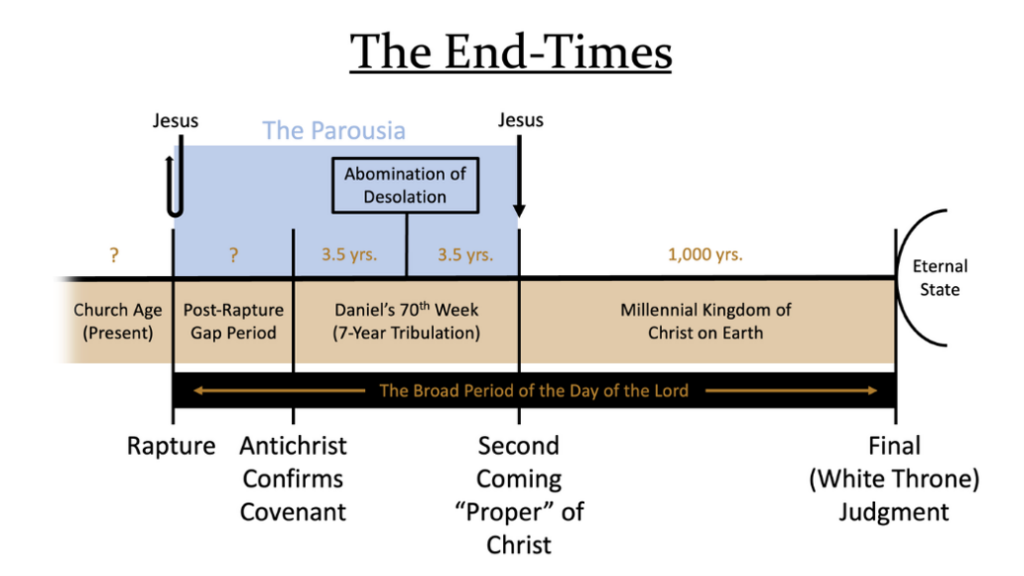
Note: This article assumes that the reader already accepts the pretribulation Rapture. Its purpose is not to establish the distinction between the Rapture and the Second Coming proper at the end of the Tribulation. Rather, it addresses an “in-house” interpretive question among pretribulation believers: whether 1 Thessalonians 3:13 refers to the Second Coming proper, as is commonly assumed, or to the pretribulation Rapture.
The Pastoral Logic of the Passage
Paul writes:
“To the end he may stablish your hearts unblameable in holiness before God, even our Father, at the coming of our Lord Jesus Christ with all his saints” (1 Thessalonians 3:13).
The verse occurs in a pastoral context. Paul is praying for Church Age believers and speaking about their present spiritual condition as Church Age Christians. His concern is that their hearts be established in holiness as they await the coming of Christ.
That matters because the event Paul mentions functions as the terminal point of their present Christian course. He is directing believers toward the moment when their earthly responsibility, endurance and sanctification reach their prophetic end goal. From a pretribulational perspective, that endpoint is the Rapture. The Rapture concludes the Church’s present earthly course, brings believers into Christ’s presence, and results in their glorification. It is the event for which the Church is presently waiting.
The Second Coming proper, by contrast, occurs after the Church has already been raptured and glorified. By that time, believers will have been with Christ throughout the Tribulation and will no longer possess a sinful nature. It would therefore be unusual for Paul to pray that Church Age believers remain unblameable in holiness until an event occurring years after their earthly course has already ended.
The natural force of the passage is that believers are to remain faithful and holy until Christ comes for them. Paul’s exhortation is immediate, pastoral and consistent with an imminent arrival of the expected endpoint.
Throughout Paul’s Letter, the Church Is Waiting for the Rapture
Arriving at a sound understanding of how to interpret 3:13 is influenced by the broader understanding of what Paul is teaching throughout his letter. The expectation he weaves throughout relates undeniably to the Church’s Rapture as an imminent rescue from the imminent judgment to befall the wicked world. This expectation appears from the opening chapter of the letter:
“And to wait for his Son from heaven, whom he raised from the dead, even Jesus, which delivered us from the wrath to come” (1 Thessalonians 1:10).
The Thessalonian believers had turned from idols to serve the living God and to wait for His Son from heaven. Their orientation was not toward the appearance of the Antichrist, the unfolding of Day of the Lord judgments, or the visible return of Christ after those events. Their hope was Christ’s coming from heaven to receive them. Paul here directly associates that expectation with deliverance from the wrath to come. The Church waits for the One who rescues it from the coming period of divine judgment. This fits naturally with the pretribulation Rapture as the opening event of the broader Day of the Lord.
The same emphasis appears at the end of chapter 2:
“For what is our hope, or joy, or crown of rejoicing? Are not even ye in the presence of our Lord Jesus Christ at his coming?” (1 Thessalonians 2:19).
Paul anticipates the Thessalonian believers being in Christ’s presence at His coming. The focus is again the Church’s gathering to the Lord and its entrance into His presence.
Chapter 3 (our passage of focus in 3:13) then also speaks of believers being established in holiness at Christ’s coming “with all his saints.” Rather than introducing an entirely different event focusing on the end of the Tribulation, it is more sensible to recognize that Paul is continuing to develop the same hope he has already been speaking of thus far (the Church’s Rapture).
The clearest explanation of the Lord’s coming in relation to the Church then appears in 1 Thessalonians 4:13-18, and is the most well-defined mention of the Rapture in all of Scripture:
“But I would not have you to be ignorant, brethren, concerning them which are asleep, that ye sorrow not, even as others which have no hope. For if we believe that Jesus died and rose again, even so them also which sleep in Jesus will God bring with him. For this we say unto you by the word of the Lord, that we which are alive and remain unto the coming of the Lord shall not prevent them which are asleep.
“For the Lord himself shall descend from heaven with a shout, with the voice of the archangel, and with the trump of God: and the dead in Christ shall rise first: Then we which are alive and remain shall be caught up together with them in the clouds, to meet the Lord in the air: and so shall we ever be with the Lord. Wherefore comfort one another with these words” (1 Thessalonians 4:13-18).
This passage explicitly describes the Rapture. Christ descends from heaven, the dead in Christ are raised, living believers are caught up, and the entire Church meets the Lord in the air.
Significantly, Paul calls this event “the coming of the Lord.” The Greek word used in 4:15 is parousia, the same term used in 1 Thessalonians 3:13. Therefore, the word parousia cannot be restricted to Christ’s visible descent to Earth at the end of the Tribulation. Paul himself uses it for the Rapture in the very next chapter.
This makes chapter 4 the interpretive center of the letter’s repeated references to Christ’s coming. Chapter 3 presents the hope in compressed form, while chapter 4 explains it in detail. The clearer and more developed passage should guide the interpretation of the shorter statement.
The final reference at the end of chapter 5 reinforces the same pattern found throughout the letter. Paul prays that the Thessalonians’ “whole spirit and soul and body be preserved blameless unto the coming of our Lord Jesus Christ” (1 Thessalonians 5:23), again presenting Christ’s coming for the Church as the endpoint of their present earthly walk and sanctification.
“And the very God of peace sanctify you wholly; and I pray God your whole spirit and soul and body be preserved blameless unto the coming of our Lord Jesus Christ” (1 Thessalonians 5:23).
For Church Age believers, that terminal point is most naturally the Rapture, not the later return of Christ to Earth after they have already been glorified and with Him throughout the Tribulation.
Therefore, it is easily noted that all through the book, Paul is seamlessly weaving the same theme as he unfolds his teaching on the Rapture as the opening event of Christ’s broader Parousia. It would be strange then to assume that the passage in 3:13 would not follow this same pattern.
Christ Comes “With” Saints at the Rapture
The phrase “with all his saints” is often considered decisive evidence for the Second Coming proper view. A common theological shorthand used by most of us today says that Christ comes “for” His saints at the Rapture but “with” His saints at the Second Coming. That distinction can be useful as a general summary, but it should not be applied so rigidly that it overrides Paul’s actual wording and the teaching he is unfolding throughout the letter.
It should be noted that First Thessalonians 4:14, while speaking of the Rapture, explicitly says: “Even so them also which sleep in Jesus will God bring with him.” At the Rapture, Christ does not descend alone. He brings with Him those who have died in Christ. Their departed spirits accompany Him as He descends. Their bodies are then raised and glorified, after which living believers are transformed and caught up together with them and with Christ.
There is therefore a genuine “with all His saints” dimension to the Rapture itself. This provides an important explanation for 1 Thessalonians 3:13. When Christ descends at the opening of the Parousia, He brings the departed saints with Him, raises the dead in Christ, and gathers the living saints into His presence. At that moment, He is associated with the complete company of His people. The phrase “with all his saints” fits this event particularly well. The Rapture is when the Church for the first time becomes fully assembled together “with Christ” in a glorified state. The dead in Christ are raised, the living are translated, and both groups are united in the Lord’s presence.
The Meaning of “With”
The Greek preposition translated “with” in 1 Thessalonians 3:13 is meta. It expresses association or accompaniment, but it does not by itself specify a destination. [1] In other words, the phrase “with all his saints” does not automatically mean “descending all the way to the earth with all his saints” as will take place at the Second Coming proper. That directional idea must be supplied by the context.
The same is true in 1 Thessalonians 4:14, where God brings those who sleep in Jesus “with him.” Paul does not say in that verse that Christ brings them to the earth. The verses that follow explain the movement: Christ descends, the dead are raised, and the living are caught up to meet Him in the air.
The grammar therefore does not force 1 Thessalonians 3:13 to refer to the final descent to Earth. It can naturally describe Christ’s coming in association with His saints during the Rapture event.
Parousia as a Broader Royal Arrival
The word parousia carries the idea of arrival, presence, or official coming. In the ancient world, it was used to describe the visit of a king, ruler or dignitary. [2] It was not necessarily limited to one split-second appearance. It could encompass the arrival as a broader period and included the events associated with it. [3]
When an honored ruler approached a city, the loyal citizens would go out to meet him outside the city before he arrived in the city itself. They would welcome him and become part of the larger royal-arrival ceremony for his physical arrival inside the actual city. A span of time could therefore take place between the initial meeting outside the city and the eventual physical arrival inside the city.
Paul uses related imagery in 1 Thessalonians 4:17 when he says believers will be caught up “to meet the Lord in the air.” The word translated “meet,” apantēsis, could be used for going out to welcome an arriving dignitary within the ancient Greek parousia context. [4] This imagery fits the Rapture as the opening stage of Christ’s Parousia. The King approaches, His people are gathered to meet Him, and His royal presence begins. The climactic conclusion of that same broader Parousia occurs later when Christ returns visibly to physically touch down on the earth in judgment and kingdom glory.
This does not require two comings. It recognizes two stages within one extended coming or presence of Christ: the Rapture at the opening of the Parousia and the Second Coming proper at the conclusion of the Parousia.
A similar distinction can be made concerning Christ’s First Coming. His birth, ministry, death, resurrection, and ascension occurred across a period of time, yet they all belonged to the larger reality of His First Coming. In the same way, Christ’s future Parousia (His Second Coming) will include an opening event and a climactic final event without becoming two disconnected comings.
The Pattern at the End of Every Chapter
It is instructive to recognize the patterning Paul uses to unfold his teaching of this doctrine in his letter. A central feature of 1 Thessalonians is the way every chapter ends with a reference to the Lord’s coming. Chapter 1 ends with believers waiting for God’s Son from heaven. Chapter 2 ends with believers in Christ’s presence at His coming. Chapter 3 ends with their hearts established at His coming with all His saints. Chapter 4 ends with the catching up of believers to meet the Lord in the air. Chapter 5 ends with Paul praying that they will be preserved blameless unto Christ’s coming.
This pattern is not accidental. Paul is progressively unfolding one consistent eschatological hope for the Church. Chapter 4 makes the nature of that hope explicit. The coming for which believers are waiting is the event at which dead and living Church saints are gathered to Christ (the Rapture). That detailed explanation naturally informs the other references throughout the letter.
It would be unnecessarily disjointed to assume that Paul repeatedly changes between unrelated aspects of Christ’s return without signaling those changes. The more natural reading is that the chapter-ending references build toward and flow from the Rapture explanation in chapter 4.
The Difficulty with the Alternative View
Interpreting 1 Thessalonians 3:13 as the Second Coming proper creates an awkward gap in Paul’s pastoral argument. It would mean that while exhorting Church Age believers to remain established in holiness, Paul directs them beyond the Rapture, beyond their glorification and beyond the entire Tribulation to Christ’s final descent to Earth. But the Rapture is the event that actually ends their present earthly course. It is the moment when their responsibility to endure in mortal bodies concludes. It is also the event Paul repeatedly presents as their immediate hope.
The alternative interpretation therefore seems to skip over the very event most relevant to Paul’s exhortation. It directs the Church’s attention to a later stage of Christ’s coming after the believers’ present need for sanctification has already ended. The context of 1 Thessalonians points in the opposite direction. Paul speaks to Church saints who are waiting for Christ, expecting deliverance from wrath, anticipating entrance into His presence, and finding comfort in the promised gathering of the dead and living in Christ.
Conclusion
After examining the relevant data, it should be clear that the phrase “with all his saints” does not require 1 Thessalonians 3:13 to refer exclusively to the Second Coming proper. The larger context of the letter strongly supports the pretribulation Rapture at the opening of Christ’s Parousia.
The pastoral logic concerns believers being established in holiness until the endpoint of their present Church Age course. First Thessalonians 4:14 explicitly teaches that Christ brings departed saints with Him at the Rapture. Verses 15-17 use parousia terminology while describing the catching away of the Church. The Greek preposition translated “with” does not demand a descent to the earth. The phrase “all his saints” fits the complete gathering of dead and living believers at the Rapture. The repeated chapter-ending pattern consistently directs the Church toward the Lord’s coming, with chapter 4 providing the clearest explanation of what that coming means for Church saints.
Christ will certainly return visibly to the earth with His glorified people at the end of the Tribulation. That is the climactic conclusion of His Parousia. But in the immediate pastoral and prophetic context of 1 Thessalonians 3:13, Paul appears to have the opening stage in view: the pretribulation Rapture, when the Lord descends from heaven, brings those who sleep in Jesus, raises the dead in Christ, and catches up the living saints to meet Him in the air.
Maranatha!
-By Michael Filipek
[1] Walter Bauer, Frederick William Danker, William F. Arndt, and F. Wilbur Gingrich, A Greek-English Lexicon of the New Testament and Other Early Christian Literature, 3rd ed., Chicago: University of Chicago Press, 2000, pp. 636-37, s.v. “μετά.”
[2] Adolf Deissmann, Light from the Ancient East: The New Testament Illustrated by Recently Discovered Texts of the Graeco-Roman World, trans. Lionel R. M. Strachan, rev. ed., London: Hodder and Stoughton, 1927, pp. 368-73.
[3] James Hope Moulton and George Milligan, The Vocabulary of the Greek Testament: Illustrated from the Papyri and Other Non-Literary Sources, London: Hodder and Stoughton, 1930, pp. 497-98, s.v. “παρουσία.”
[4] Erik Peterson, “ἀπάντησις,” in Theological Dictionary of the New Testament, ed. Gerhard Kittel, trans. Geoffrey W. Bromiley, vol. 1, Grand Rapids: Eerdmans, 1964, pp. 380-81.