
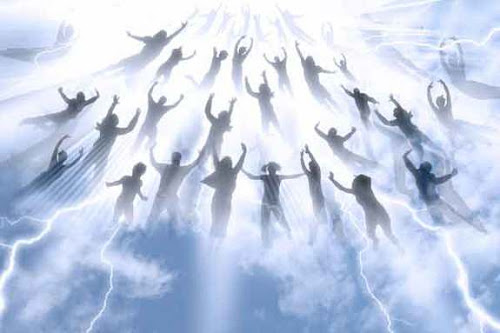
 There are differing views when it comes to the placement of the rapture in the framework of end-time events. Some believe Scripture teaches a pre-trib (before the tribulation period) rapture, while others teach a mid-trib (in the middle of the 7-year tribulation period) rapture, and some teach a post-trib (at the end of the tribulation period) rapture. The order of events isn’t spelled out in textbook fashion, so students have to form a framework by deduction and logic as they study Scripture.
Good Bible-believing Christians can be found in all three camps. This should not be an area of division among Christians. I have friends in each camp. We can agree to disagree without breaking fellowship. The world will recognize true Christianity by how his children love each other (John 13:35).
That said, I personally believe the Bible supports a pre-trib view of the rapture. From patterns and types in the Old Testament (Noah, Lot, Israelites in Goshen, Daniel being raised to a higher position and avoiding the fiery furnace, and a few others), to key passages in the New Testament, the Bible supports a pre-trib rapture from cover to cover.
Some Key Reasons
For example: We are “not appointed to wrath” (1 Thessalonians 5:9); In Revelation, the church is absent from all of the tribulation chapters; The consistent picture of end-time events is that of Christ coming to get his Bride for marriage (not to take her through suffering). Also, there is strong scriptural and linguistic support to demonstrate that the falling away (lit., the departing) spoken of in 2 Thessalonians 2:3 is a reference to the rapture—meaning the rapture must come before that day (the Day of the Lord/Tribulation) comes.
The Framework
The key rapture passages (1 Thessalonians 4:16-17, 1 Corinthians 15:51-53, John 14:1-4)—as understood in the context of the pre-tribulation view—paint the picture of Jesus entering Earth’s atmosphere, raising and catching away all Christians who died before the rapture, then immediately catching away all living believers to meet the Lord in the air as well. Then he will take us all to heaven, hiding us and protecting us from the horrific events of the tribulation period.
Is the Rapture in the Old Testament?
Here’s what I’m leading up to. We know Paul revealed this mystery to the church in the New Testament—himself prematurely raptured to see it firsthand (2 Corinthians 12:2-4, 1 Corinthians 15:8). We also know that many mysteries revealed in the New Testament were concealed in the Old Testament.
With new information, we look back to the writings of the Old Testament and find that it was there all along. We just couldn’t see it without the full revelation of the mystery at hand.
Scripture can have an immediate application and a deeper, prophetic application. Scripture also informs us that even the tiniest stroke or letter found in the Bible was supernaturally inspired by God (Matthew 5:18).
In 2 Peter, we learn that no prophecy in Scripture has a private or secret interpretation. Prophecy can be understood by comparing Scripture with Scripture (2 Peter 1:20).
With those thoughts in mind, I pose this question: Are there any specific verses in the Old Testament that reference the rapture? I believe there are.
Consider these examples:
Psalm 27:5
“For in the time of trouble He shall hide me in His pavilion; In the secret place of His tabernacle He shall hide me; He shall set me high upon a rock.”
In light of New Testament teaching, I would paraphrase Psalm 27:5 this way: “During the horrific tribulation period, God will hide his people in heaven—high above the trouble.”
Or, how about this verse?
Psalm 57:1
“Be merciful to me, O God, be merciful to me! For my soul trusts in You; And in the shadow of Your wings I will make my refuge, until these calamities have passed by.”
Again, with our pre-trib rapture framework in mind, this could mean: “Those who trust in God’s mercy will be physically close to God, taking refuge during the terrible events of the tribulation period on earth.”
Here’s another.
Isaiah 26:19-21
“Your dead shall live; Together with my dead body they shall arise. Awake and sing, you who dwell in dust; For your dew is like the dew of herbs, And the earth shall cast out the dead. Take Refuge from the Coming Judgment. Come, my people, enter your chambers, and shut your doors behind you; Hide yourself, as it were, for a little moment, until the indignation is past. For behold, the Lord comes out of His place to punish the inhabitants of the earth for their iniquity; The earth will also disclose her blood, And will no more cover her slain.”
Here’s the THPV (Todd Hampson’s Paraphrase Version [I’m joking of course]): “The dead in Christ will rise and take refuge, away from judgment. God’s people will enter a sealed chamber for a period of time until the indignation or wrath is completed. God will come out of his place to punish the whole earth during a time when all sin is seen for what it really is.”
But wait, there’s more!
Zephaniah 2:3
“Seek the Lord, all you meek of the earth, Who have upheld His justice. Seek righteousness, seek humility. It may be that you will be hidden in the day of the Lord’s anger.”
We could paraphrase this like so: “Those who truly seek God’s ways will be hidden and protected during the well-known ‘Day of the Lord,’ also known as the tribulation period.”
Two more to go to make my point. Hang in there!
Psalm 83:3
“They have taken crafty counsel against Your people, and consulted together against Your sheltered ones.”
This verse makes reference to God’s two distinct people groups, the Jewish people (David’s people), and the sheltered or hidden ones. That’s you and I as believers in Christ (Colossians 3:1-4).
Ok, one last one and this one is a bit more veiled, I’ll admit, but relevant nonetheless. The Song of Solomon definitely has poetic beauty, and application for relationships and married love, but many passages also have a secondary prophetic meaning. It is a foreshadow, a picture of Christ and his Bride.
Song of Solomon 2:10-13
“My beloved spoke, and said to me: ‘Rise up, my love, my fair one, and come away. For lo, the winter is past, the rain is over and gone. The flowers appear on the earth; the time of singing has come, and the voice of the turtledove is heard in our land. The fig tree puts forth her green figs, and the vines with the tender grapes give a good smell. Rise up, my love, my fair one, and come away!’”
I don’t have space to unpack all of the symbolism and how it relates to end-time events, but notice that the groom speaks, calling his bride to rise up and come away at a specific appointed time. He also notes the fig tree has green figs. These are young, unripened figs. This may be a veiled reference to the mention of the young fig tree in Matthew 24:32-34, which many experts agree symbolizes Israel’s rebirth as the key sign that generation has entered the last-days timeframe (a topic for another day).
Some may disagree with me about the Song of Solomon verses (which is why I listed them last), but I believe they are valid. The more I study Scripture, the more I realize the Bible is intricately designed to a level of detail which we have only begun to understand (Psalm 119:89, 1 Corinthians 13:12).
These Old Testament verses are consistent with the New Testament teaching about the rapture. If the Bible is without error, and inspired by God himself (2 Peter 1:21), then we should expect to see this internal consistency between the Old and New Testament. What an amazing book we hold, and an exciting future we have in store!
Considering these veiled references to the rapture in the Old Testament, coupled with the types and patterns of a pre-trib rapture, this should give us even more confidence in our blessed hope!
toddhampson.com | todd@timbuktoons.com